
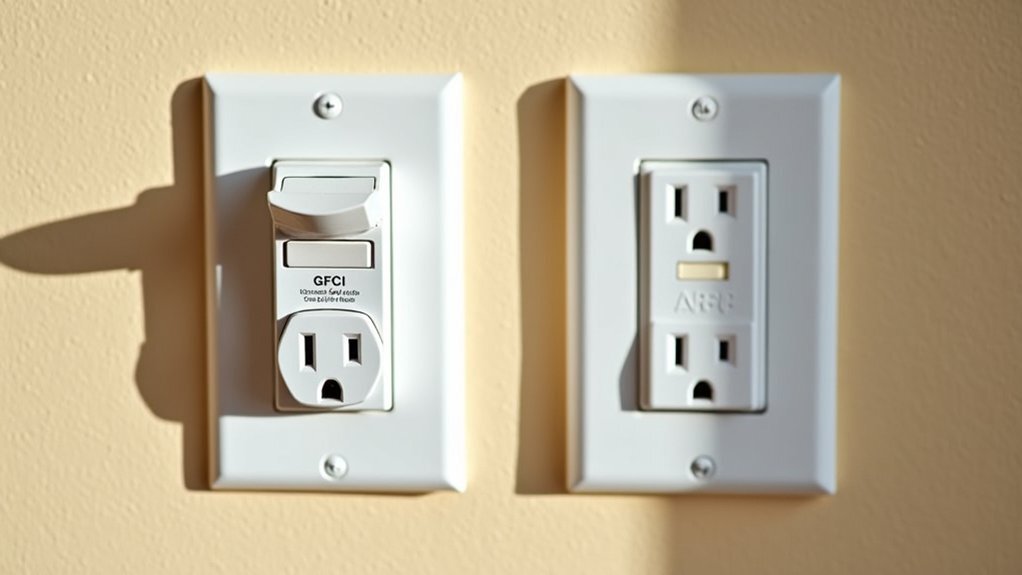
What Is the Difference Between GFCI and AFCI Outlets?
GFCI and AFCI outlets have different safety roles in your home. GFCIs protect against electrical shocks by shutting off power when they detect imbalances in electrical current, often used in areas with moisture like kitchens and bathrooms. On the other hand, AFCIs prevent electrical fires by identifying dangerous arcing conditions in wiring. While both enhance safety, they target distinct risks. If you want to know more about their operation and installation, continue exploring the details.
Key Takeaways
- GFCI outlets protect against electrical shocks by monitoring ground faults, while AFCI outlets prevent electrical fires caused by arc faults.
- GFCIs trip when they detect an imbalance of about 5 milliamperes between hot and neutral wires.
- AFCIs continuously monitor for dangerous arcing signatures and shut off power when unusual arcs are detected.
- GFCIs are commonly installed in moisture-prone areas like kitchens and bathrooms, whereas AFCIs are used in living areas with higher electrical loads.
- Using both GFCIs and AFCIs together maximizes safety by addressing both shock hazards and fire risks in residential settings.
Understanding GFCI: Purpose and Functionality
When it comes to electrical safety, understanding Ground Fault Circuit Interrupters (GFCIs) is vital, especially in areas prone to moisture. GFCIs are fast-acting devices that shut off power within 1/40 of a second when they detect a ground fault, protecting you from electrical shocks. They compare the current in hot and neutral wires, tripping if there's a difference of about 5 milliamperes. You'll often find GFCIs in kitchens, bathrooms, and outdoor outlets where water is present. They can be installed as outlets or circuit breakers, and even portable options are available. Regular testing is important to guarantee they function correctly, providing peace of mind against electrocution and electrical fires. Always prioritize your safety by keeping GFCIs in good working order, as they are essential for safety in areas with water exposure. For professional GFCI installation in your home, our residential electrical services ensure proper safety compliance.
Understanding AFCI: Purpose and Functionality
AFCIs, or Arc Fault Circuit Interrupters, play an essential role in safeguarding your home from electrical fires caused by arc faults. These devices detect unintended sparks from damaged or loose wiring, which can generate enough heat to ignite nearby materials without tripping standard breakers. With over 28,000 home fires annually linked to arc faults, AFCIs continuously monitor electrical circuits for unique arcing signatures. They distinguish between normal currents and those caused by faults, shutting off power when arcing is detected. Available as circuit breakers or receptacles, AFCIs enhance safety in your home by addressing a leading cause of electrical fires, ensuring your wiring remains protected and reducing the risk of disaster. Investing in AFCIs is a proactive measure for fire prevention and helps to prevent electrical fires that can result from arc faults.
How GFCI Devices Operate
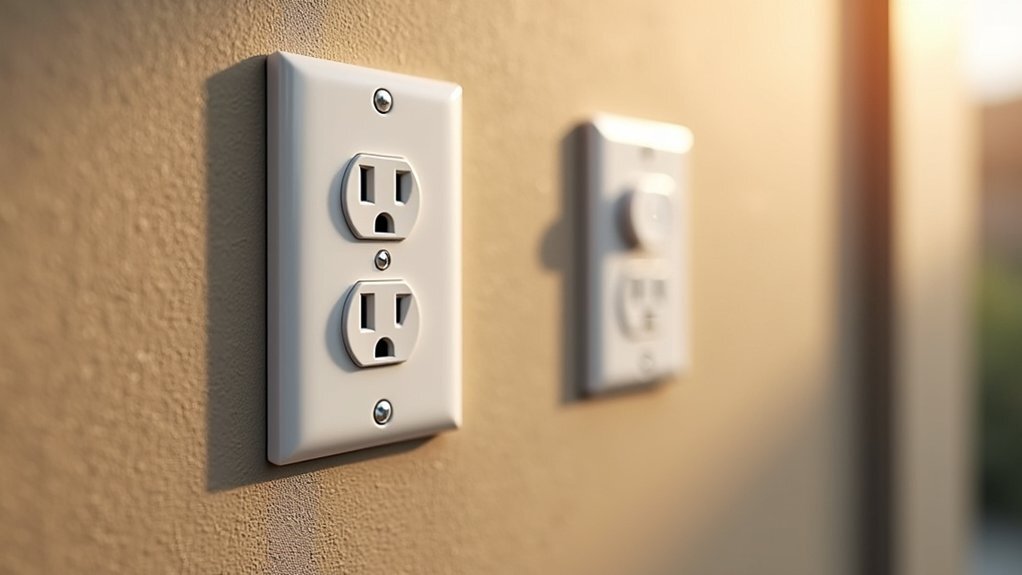
GFCI devices operate by continuously monitoring the flow of electricity through your outlets, guaranteeing safety against potential shocks. They compare the current flowing into an outlet via the hot wire with the returning current through the neutral wire. If they detect an imbalance, indicating leakage, the device trips and cuts power almost instantly, typically within 1/40th of a second. This quick response can prevent serious injuries or electrocution. GFCIs can be reset manually once the fault is cleared. You'll often find them in areas prone to moisture, like bathrooms and kitchens. Regular testing using the "Test" button guarantees they function properly, maintaining your safety in high-risk environments. GFCIs have significantly reduced home electrocutions since their introduction in the 1970s, showcasing their vital role in electrical safety.
How AFCI Devices Operate
While you might be familiar with GFCI devices, AFCIs play an important role in enhancing electrical safety by detecting dangerous arcing conditions. They continuously monitor electrical current, identifying arc waveforms that signal potential hazards. By analyzing frequencies around 100 kHz, AFCIs differentiate between normal and harmful arcs using advanced logic circuits and waveform filtering. When they detect a dangerous arc, such as a series or parallel arc from damaged wiring, they promptly interrupt the current to prevent fire risks. AFCIs combine traditional trip mechanisms with electronic detection methods, ensuring thorough protection. Their ability to recognize both safe and unsafe electrical patterns makes them vital for preventing ignition sources in your home's electrical system. Additionally, AFCIs are required in new constructions to enhance overall electrical safety and mitigate fire risks.
Common Installation Locations for GFCI
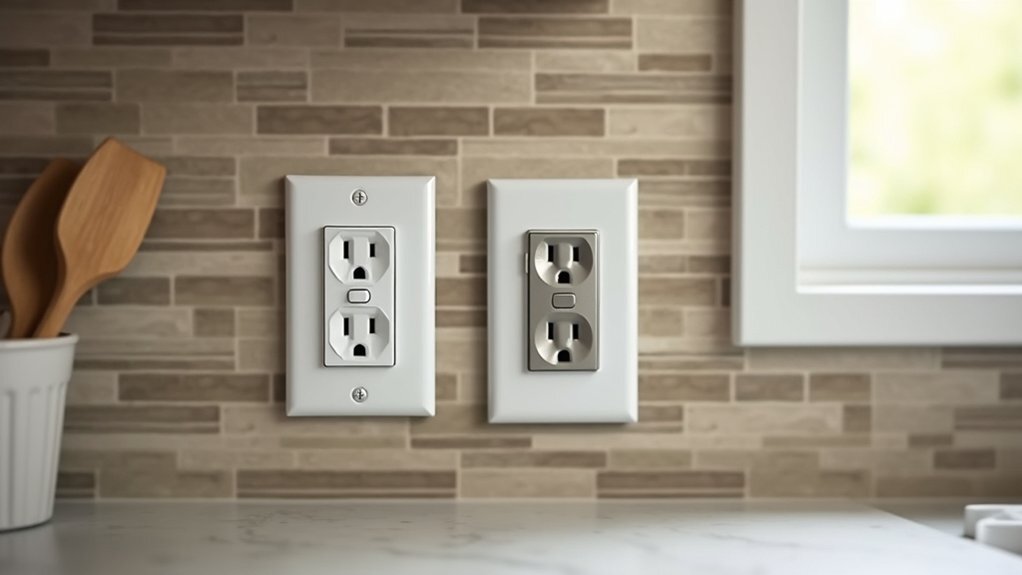
When it comes to enhancing safety in your home, understanding where to install GFCI outlets is crucial. You should install GFCI outlets in bathrooms, where moisture exposure is high, protecting you from shocks while using devices like hair dryers. In kitchens, all receptacles, including those for countertop appliances, must have GFCI protection to guarantee safety during food preparation. Outdoor areas also require GFCI outlets to prevent electrical shocks from weather exposure, so make sure to use weather-resistant covers. Additionally, install GFCI outlets in garages and basements, where moisture can pose a risk. Proper grounding is essential when installing GFCI outlets near pools and spas to reduce shock risks associated with water. Prioritizing these locations keeps your home safe. For professional GFCI installation and electrical safety upgrades, contact our experienced team today.
Common Installation Locations for AFCI
AFCI outlets play a vital role in protecting your home from electrical fires, so knowing where to install them is essential. According to the NEC, you need AFCI protection in all 120-volt, single-phase, 15- and 20-amp branch circuits supplying outlets in residential areas. Key locations include kitchens, family rooms, living rooms, bedrooms, and laundry areas. Even hallways and closets require coverage, as arc faults can occur anywhere. Finished basements count as living space and must have AFCIs as well. While bathrooms, garages, and exterior locations generally don't require AFCI protection, be sure to install devices in easily accessible spots for testing and resetting. This proactive measure greatly enhances your home's safety. Additionally, remember that AFCI protection applies not just to receptacles, but also to lighting fixtures and switches throughout these spaces.
Device Forms: GFCI vs. AFCI
Understanding the device forms of GFCI and AFCI outlets is essential for ensuring electrical safety in your home. GFCI outlets typically appear as receptacle-style devices with TEST and RESET buttons, designed for point-of-use in damp areas like kitchens and bathrooms. They can also be integrated into circuit breakers that protect entire circuits. In contrast, AFCI devices also come as receptacle-style outlets and circuit breakers but focus on detecting arcing faults. Stand-alone AFCI receptacles and dual-function breakers combine both GFCI and AFCI protections, enhancing safety. While both types share visual similarities, their internal circuitry and detection technologies differ, reflecting their specific safety roles in preventing electric shocks and fires. Choosing the right form factor is vital for your home's electrical safety. Understanding the importance of GFCI and AFCI outlets is crucial for maintaining a safe electrical environment.
The Safety Impact of GFCI and AFCI Devices
While both GFCI and AFCI devices serve essential roles in electrical safety, their impacts on preventing hazards differ markedly. GFCI outlets protect you from electric shock by detecting ground faults and quickly cutting power, especially in wet areas like kitchens and bathrooms. Their rapid response greatly reduces the risk of electrocution. On the other hand, AFCI outlets focus on preventing electrical fires caused by arc faults, which can occur from damaged wires and loose connections. They monitor unusual power spikes to stop fires before they start. Using both devices together maximizes safety, as GFCIs address shock hazards while AFCIs mitigate fire risks, ensuring a thorough approach to protecting your home and loved ones. Regular testing of GFCI systems is also recommended to ensure operational status and effectiveness. At Darby Electric Service, we specialize in comprehensive electrical safety solutions - learn more about our company and our commitment to keeping your home safe.
Frequently Asked Questions
Can GFCI and AFCI Devices Be Used Together?
Yes, you can use GFCI and AFCI devices together for enhanced electrical safety. By combining them, you gain protection from both ground faults and arc faults, which reduces the risk of electrical shocks and fires. Dual-function breakers simplify installation by providing both protections in one unit. Just verify proper installation and compatibility to avoid nuisance tripping, and check local codes to meet safety requirements in your home's electrical system.
How Often Should GFCI and AFCI Devices Be Tested?
You should test GFCI and AFCI devices at least once a month. This monthly check guarantees they're functioning correctly and can respond to electrical faults. For GFCIs, press the "Test" button to see if it trips; for AFCIs, do the same to simulate an arc fault. If either device fails to trip, turn off the power and consult a qualified electrician. Regular testing keeps you and your home safe from electrical hazards.
Are GFCI and AFCI Devices Required by Law?
Yes, GFCI and AFCI devices are often required by law in specific areas of your home. GFCI protection is mandated in moisture-prone locations like bathrooms and kitchens, while AFCI protection is required in most living areas to prevent fire risks. Local codes may vary, so it's essential to check your area's regulations. Staying compliant not only enhances safety but also helps you avoid potential fines or issues during inspections.
What Should I Do if a GFCI or AFCI Trips?
If a GFCI or AFCI trips, first unplug any connected devices and press the reset button after ensuring the issue's resolved. If it trips again, inspect for moisture, damaged cords, or faulty wiring. Document when and where it occurs to help identify patterns. If the outlet continues to trip or won't reset, consider consulting a professional electrician, as persistent issues may indicate more serious electrical problems that need attention.
Do GFCI and AFCI Devices Have a Lifespan?
Yes, GFCI and AFCI devices typically have a lifespan of 10 to 15 years. Factors like frequent testing, environmental conditions, and electrical surges can affect their longevity. It's important to regularly test these devices to guarantee they function properly, although this might slightly reduce their lifespan. If you notice signs like nuisance tripping or failure to reset, it's a good idea to replace them sooner rather than later.
Need Professional Electrical Services?
Trust the experts at Darby Electric Service for all your electrical needs in Arlington, TX.
Related Articles

Battery Storage Systems Explained: Powering Your Home During Outages
Learn how battery storage systems provide reliable backup power during outages, integrate with solar panels, and enhance your home's energy independence.

The Future of Energy: How Solar Power Integrates With Modern Electrical Systems
Discover how solar power's rapid growth and innovative technologies are transforming modern electrical systems, creating sustainable energy solutions for residential, commercial, and industrial applications.
How Infrared Scanning Detects Electrical Problems Before They Start
Discover how infrared thermal imaging technology identifies overheating components, loose connections, and potential electrical failures before they become costly emergencies.
Understanding the Difference Between Single-Phase and Three-Phase Power
Learn the key differences between single-phase and three-phase power systems, including efficiency, cost, load handling, and practical applications for residential, commercial, and industrial use.
How to Plan for an Electrical System Expansion in a Growing Business
Learn how to effectively plan for electrical system expansion in your growing business, from assessing infrastructure to implementing energy-efficient solutions and ensuring compliance with safety regulations.
Why Every Business Should Consider an Electrical Maintenance Contract
Discover why electrical maintenance contracts are essential for business success, offering cost savings, enhanced safety, reduced downtime, and improved operational efficiency while protecting your investment.

How Lighting Design Impacts Employee Productivity and Mood
Discover how effective lighting design can boost productivity by over 60%, improve employee mood, and create significant cost savings through strategic implementation of natural and artificial lighting solutions.
Understanding Your Home's Electrical Code Requirements
Learn about essential electrical code requirements for your home, including 2025 updates for EV charging, safety enhancements, and compliance standards to keep your property safe and up to code.

The Hidden Dangers of DIY Electrical Repairs
DIY electrical repairs can hide serious dangers. You risk electrocution, as many accidents lead to deaths and injuries each year. Without expertise, you may create fire hazards that can damage your property and invalidate your homeowners' insurance.
How Whole-Home Surge Protection Keeps Your Electronics Safe
Whole-home surge protection keeps your electronics safe by acting as a robust defense against electrical surges. Installed at your main electrical panel, it uses advanced technologies like Metal Oxide Varistors to absorb excess voltage and divert it safely to ground.

Essential Electrical Tools Every Homeowner Should Own
Discover the must-have electrical tools for every homeowner. From voltage testers to wire strippers, learn about the essential equipment that ensures safety and efficiency in your electrical projects.
Why You Should Switch to Copper Wiring for Home Safety
Switching to copper wiring is essential for your home's safety. Copper offers superior electrical conductivity, reducing energy loss and minimizing fire risks. Learn about its durability, cost-effectiveness, and compliance with safety codes.

Generator Installation and Maintenance: What Homeowners Need to Know
When it comes to generator installation and maintenance, you've got to get it right for safety and efficiency. Learn about proper placement, electrical connections, maintenance routines, and safety guidelines for reliable backup power.
Smart Thermostats: Are They Worth the Investment?
Smart thermostats can cut your energy bills by 10-15% while enhancing comfort and convenience. Learn about their features, benefits, and whether they're worth the investment for your home.

Steps to Lower Your Electricity Bill Without Major Upgrades
Discover simple yet effective strategies to reduce your electricity costs without expensive home renovations. Learn about thermostat optimization, appliance efficiency, and energy-saving habits.

Electric Vehicle Charging Station Installation for Residences
Learn how to install an electric vehicle charging station at home with expert guidance on charger types, electrical requirements, permits, and professional installation.

How Often Should I Schedule Professional Electrical Inspections?
Learn the recommended frequency for residential and commercial electrical inspections to keep your property safe and compliant with electrical codes.

Smart Home Electrical Upgrades That Boost Comfort and Security
Discover how smart home electrical upgrades can enhance your comfort, security, and energy efficiency while increasing your property value.

Outdoor Lighting Design and Installation Tips for Businesses
Achieve a stunning outdoor lighting design for your business that enhances safety and aesthetics—discover essential tips to illuminate your space effectively.
The Risks of Outdated Electrical Wiring in Older Properties
Outdated electrical wiring in older properties presents serious risks. It can cause fires due to overheating and deteriorating insulation, while also increasing the danger of electrocution from exposed wires. These old systems often can't handle modern appliance demands.

How to Teach Children Electrical Safety at Home
Learn essential strategies to teach your kids electrical safety at home. From understanding basic electricity concepts to recognizing hazards and establishing safety practices, discover how to protect your children from electrical dangers through engaging education and safety equipment.