Smart Thermostats: Are They Worth the Investment?
Smart Thermostats: Are They Worth the Investment?
Smart thermostats are definitely worth the investment. They can cut your energy bills by 10-12% on heating and up to 15% on cooling. Many users recover their initial costs within just a couple of years. With smart features like remote control, learning capabilities, and integration with smart home devices, they enhance both comfort and efficiency. Plus, they help reduce your carbon footprint. To discover more about their benefits and features, keep exploring!
Key Takeaways
- Smart thermostats can save users 10-23% on energy bills, recouping initial costs within 1-2 years.
- They offer remote control and automation features, enhancing comfort and convenience.
- Integration with smart home systems and voice assistants increases usability and efficiency.
- Environmental benefits include reduced energy consumption and lower carbon footprints.
- Initial costs and compatibility with existing systems may be potential drawbacks to consider.
Energy Savings and Cost Effectiveness
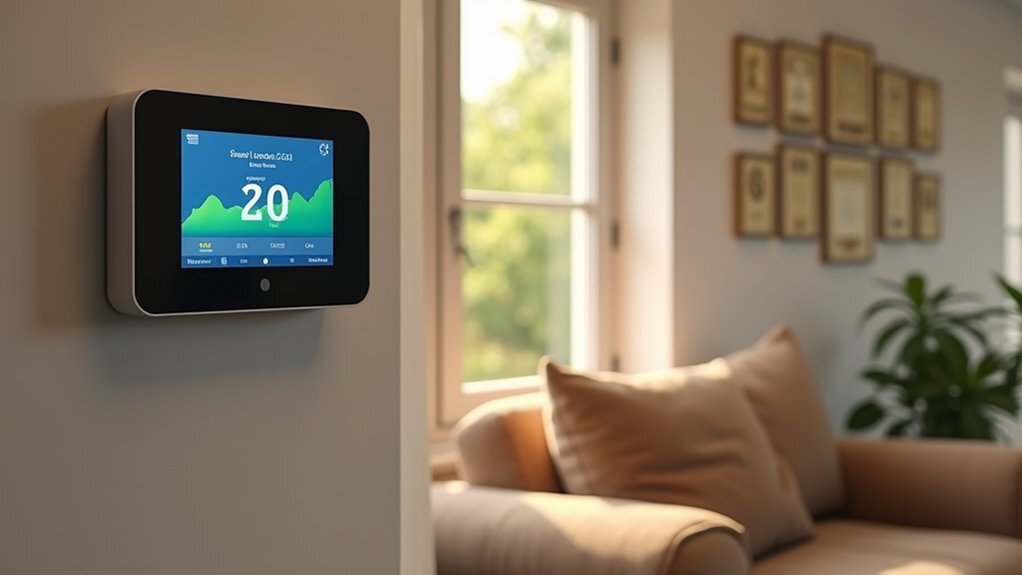
Smart thermostats can greatly cut your energy bills, making them a savvy investment for homeowners. On average, you'll save about 10-12% on heating and 15% on cooling costs. Some models, like Ecobee, claim savings of up to 26%, potentially saving you around $200-$250 annually. Although these devices range from $150 to $350, many users recoup their costs within 1-2 years. Utility rebates can further enhance your savings. Keep in mind that your actual savings depend on factors like your home's size, HVAC efficiency, and usage habits. By optimizing your heating and cooling, smart thermostats not only lower your bills but also contribute to a more sustainable household. Investing in one can lead to long-term financial benefits, especially considering the average savings of 10-12% reported by users.
For professional installation of smart thermostats and electrical upgrades to support advanced home automation systems, our residential electrical services team can ensure proper wiring and setup.
Technology and Features
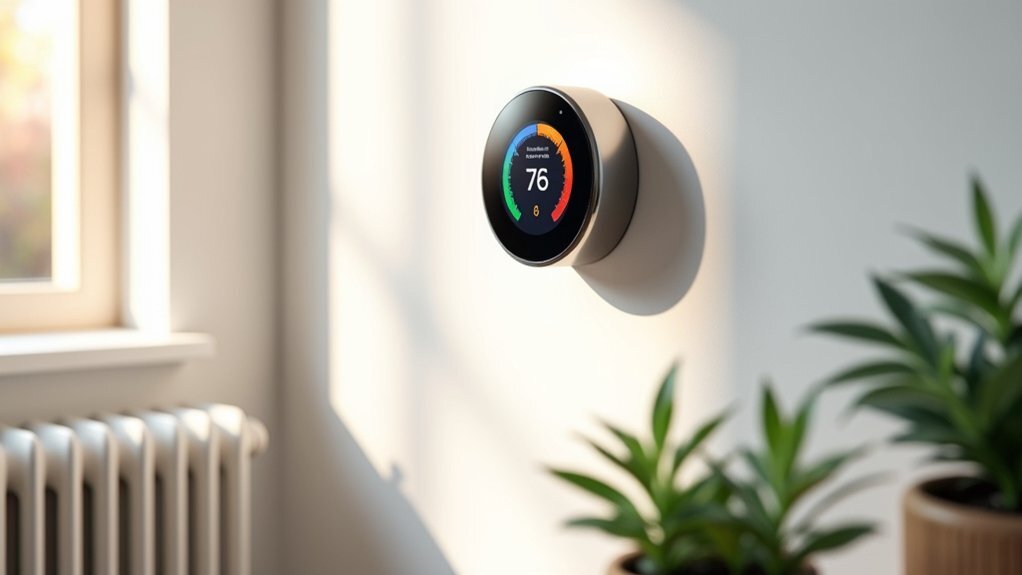
As technology evolves, modern thermostats are becoming essential tools for efficient home management. Smart thermostats connect to your Wi-Fi, allowing you to control them remotely via your smartphone or tablet from anywhere. You can adjust settings while away, making it easy to manage energy use. These devices often integrate with virtual assistants like Amazon Alexa or Google Assistant, enabling voice commands for added convenience. They learn your habits, automatically adjusting temperatures based on your routine and seasonal changes. Additionally, smart thermostats work seamlessly with other smart home devices, allowing for centralized control and automation. Maintenance alerts keep you informed about system performance, ensuring your HVAC system runs efficiently and lasts longer. Wireless connectivity is a key feature that enhances the convenience of managing your home's climate.
Comfort and Energy Management
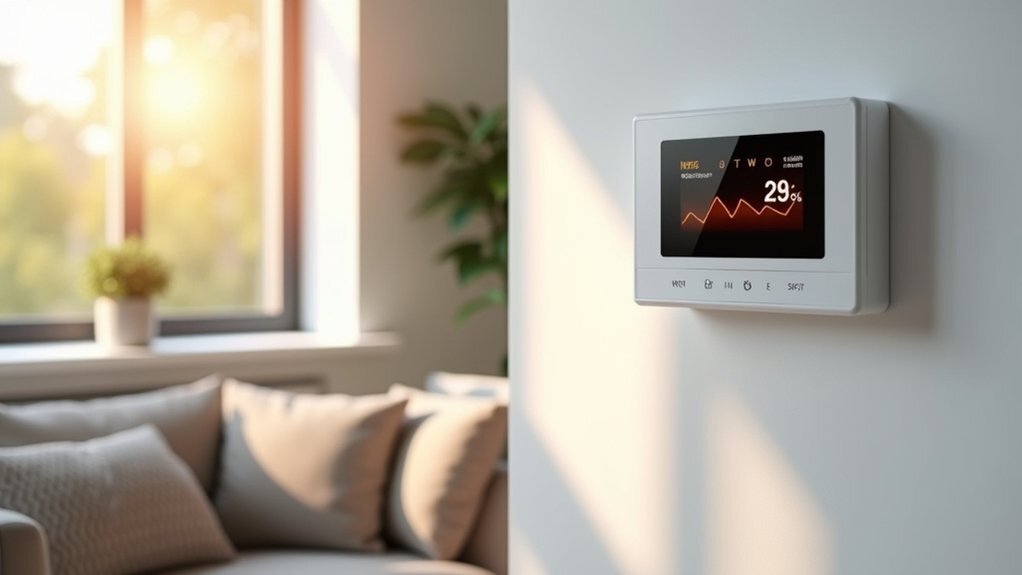
When it comes to managing comfort and energy in your home, smart thermostats are game-changers. They can reduce heating costs by 10-12% and cooling costs by up to 15%, potentially saving you around $140 a year. With advanced models, you might even see savings of up to $200 annually. Smart thermostats allow you to customize room temperatures, enhancing comfort while optimizing energy use. Their remote controls let you adjust settings from anywhere, and geofencing automatically adapts based on your presence. Plus, these devices learn your habits, anticipating your needs and maintaining ideal temperatures without wasting energy. Overall, smart thermostats offer a blend of personalized comfort and efficient energy management, making them a worthy investment. Additionally, they contribute to lower energy consumption, which supports eco-friendly practices in home management.
Environmental Impact and Grid Benefits
By enhancing comfort and energy management, smart thermostats also play a notable role in addressing environmental concerns. They reduce energy consumption by optimizing heating and cooling, which lowers greenhouse gas emissions from fossil fuels. You can save 10-23% on energy costs, notably reducing your carbon footprint. These devices minimize unnecessary HVAC operation, supporting climate change mitigation. Additionally, smart thermostats help stabilize the electric grid by participating in demand response programs, easing strain during peak hours. This not only supports load management but also reduces reliance on polluting power plants. With real-time feedback, you're empowered to make conscious energy choices, reinforcing sustainable behavior and contributing to broader goals of environmental preservation. Furthermore, smart thermostats learn daily routines to adjust temperature settings automatically, enhancing their efficiency and effectiveness in energy management.
Adoption Considerations and Limitations
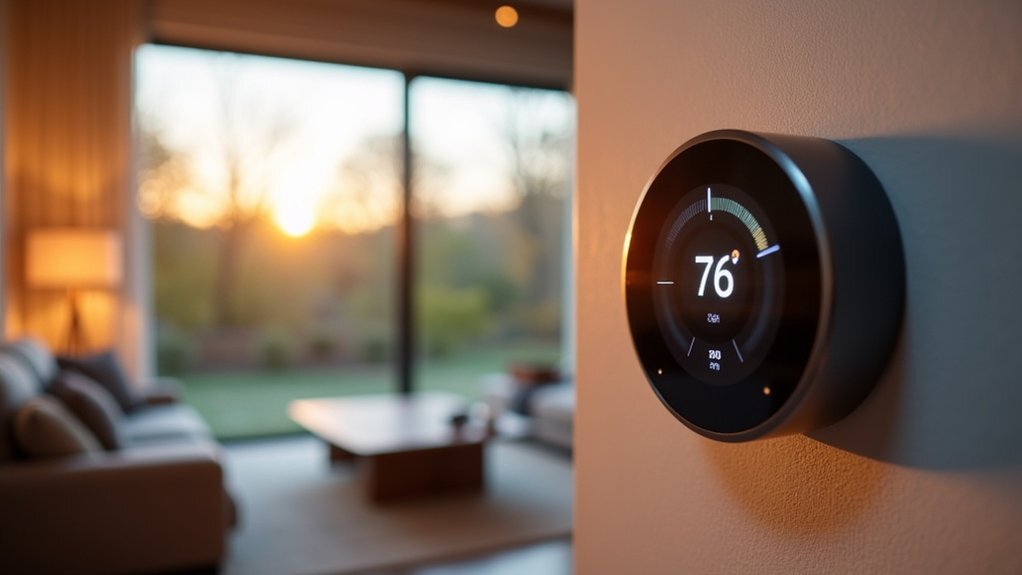
Although smart thermostats offer significant benefits, several adoption considerations and limitations can influence your decision to install one. The initial costs, including purchase and professional installation, can deter budget-conscious individuals. Additionally, compatibility issues with older HVAC systems may complicate retrofitting, requiring careful evaluation before you commit. While many homeowners seek energy savings, the actual benefits depend on your usage patterns and local energy prices. Furthermore, smart thermostats need reliable internet access to function properly, which can be a hurdle in some households. Finally, concerns about privacy and data security may arise as these devices integrate with smart home ecosystems. Weighing these factors is essential before making your investment. Notably, the market for smart thermostats is projected to grow significantly, reaching USD 4,132.1 million by 2033, reflecting the increasing demand for energy efficiency and smart home technologies.
For expert consultation on smart thermostat compatibility with your existing HVAC system and professional installation services, contact our experienced team for personalized guidance.
Frequently Asked Questions
How Do Smart Thermostats Integrate With Existing HVAC Systems?
Smart thermostats integrate with existing HVAC systems by connecting to your home's wiring and communicating with various platforms like Amazon Alexa or Google Home. You'll need to verify compatibility with your system type, as older models might require adapters. During setup, follow on-screen instructions to configure your preferences. Once connected, the thermostat can optimize comfort and energy use, responding to occupancy and environmental changes for a seamless experience.
Can Smart Thermostats Work in Homes Without Central Heating or Cooling?
Yes, smart thermostats can work in homes without central heating or cooling, but their effectiveness depends on compatibility. They may control baseboard heaters or window ACs if properly wired. You'll need to check manufacturer guidelines for specific models that suit your system. While features like scheduling and remote control can help, energy savings might be limited compared to central systems. Consider smart plugs for better integration with your existing units.
What Happens During a Power Outage With Smart Thermostats?
During a power outage, your smart thermostat often resets to default modes, switching from settings like "Eco" back to regular "Heat." This can lead to unnecessary heating or cooling, raising your energy costs. After power restoration, you might need to restart both your thermostat and router to regain connectivity. You can adjust settings through the app or thermostat interface to help maintain your preferred modes and minimize unintended changes during outages.
Are There Any Subscription Fees Associated With Smart Thermostats?
Most smart thermostats don't have subscription fees for basic features like remote control and scheduling. If you want advanced options, some brands offer optional plans that can enhance security or provide additional monitoring. For instance, Ecobee has a Smart Security subscription, but it's not required for standard use. Overall, you can enjoy essential functions without any ongoing costs; the fees usually apply only to extra features that add convenience.
How Do I Troubleshoot Connectivity Issues With My Smart Thermostat?
To troubleshoot connectivity issues with your smart thermostat, start by checking your WiFi network and ensuring it's functioning properly. Make sure your thermostat is within range of the signal. Restart the thermostat and connected devices, and verify that all software is up to date. If error codes appear, look them up for specific solutions. If problems persist, consider contacting customer support with your device's serial number for further assistance.
For professional troubleshooting and electrical system diagnostics, our skilled technicians at Darby Electric Service can help resolve connectivity issues and ensure your smart home devices operate reliably.
Need Professional Electrical Services?
Trust the experts at Darby Electric Service for all your electrical needs in Arlington, TX.
Related Articles
Battery Storage Systems Explained: Powering Your Home During Outages
Learn how battery storage systems provide reliable backup power during outages, integrate with solar panels, and enhance your home's energy independence.
The Future of Energy: How Solar Power Integrates With Modern Electrical Systems
Discover how solar power's rapid growth and innovative technologies are transforming modern electrical systems, creating sustainable energy solutions for residential, commercial, and industrial applications.
How Infrared Scanning Detects Electrical Problems Before They Start
Discover how infrared thermal imaging technology identifies overheating components, loose connections, and potential electrical failures before they become costly emergencies.
Understanding the Difference Between Single-Phase and Three-Phase Power
Learn the key differences between single-phase and three-phase power systems, including efficiency, cost, load handling, and practical applications for residential, commercial, and industrial use.
How to Plan for an Electrical System Expansion in a Growing Business
Learn how to effectively plan for electrical system expansion in your growing business, from assessing infrastructure to implementing energy-efficient solutions and ensuring compliance with safety regulations.
Why Every Business Should Consider an Electrical Maintenance Contract
Discover why electrical maintenance contracts are essential for business success, offering cost savings, enhanced safety, reduced downtime, and improved operational efficiency while protecting your investment.

How Lighting Design Impacts Employee Productivity and Mood
Discover how effective lighting design can boost productivity by over 60%, improve employee mood, and create significant cost savings through strategic implementation of natural and artificial lighting solutions.
Understanding Your Home's Electrical Code Requirements
Learn about essential electrical code requirements for your home, including 2025 updates for EV charging, safety enhancements, and compliance standards to keep your property safe and up to code.

The Hidden Dangers of DIY Electrical Repairs
DIY electrical repairs can hide serious dangers. You risk electrocution, as many accidents lead to deaths and injuries each year. Without expertise, you may create fire hazards that can damage your property and invalidate your homeowners' insurance.
How Whole-Home Surge Protection Keeps Your Electronics Safe
Whole-home surge protection keeps your electronics safe by acting as a robust defense against electrical surges. Installed at your main electrical panel, it uses advanced technologies like Metal Oxide Varistors to absorb excess voltage and divert it safely to ground.
Essential Electrical Tools Every Homeowner Should Own
Discover the must-have electrical tools for every homeowner. From voltage testers to wire strippers, learn about the essential equipment that ensures safety and efficiency in your electrical projects.
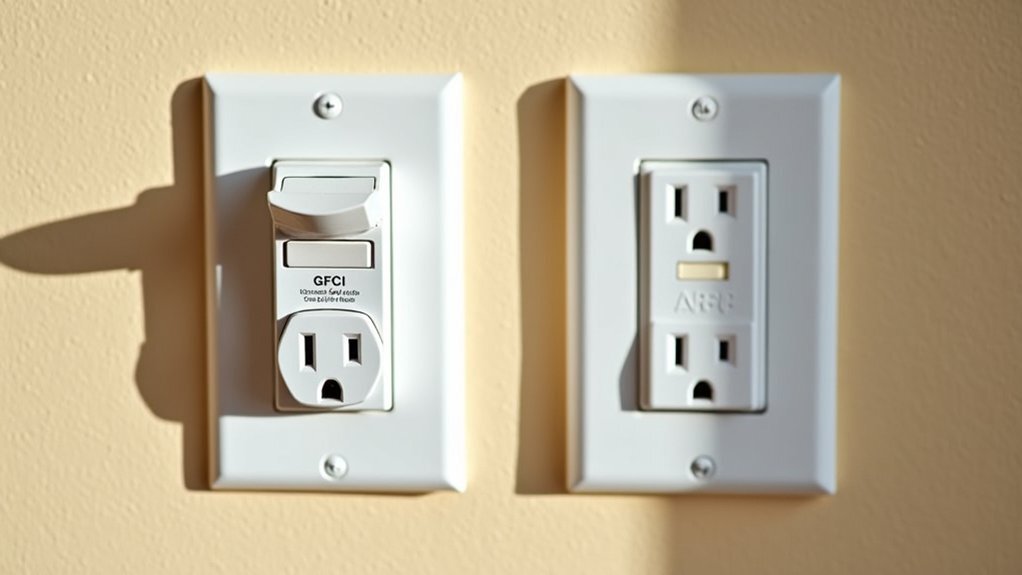
What Is the Difference Between GFCI and AFCI Outlets?
GFCI and AFCI outlets have different safety roles in your home. GFCIs protect against electrical shocks by shutting off power when they detect imbalances in electrical current, while AFCIs prevent electrical fires by identifying dangerous arcing conditions in wiring.
Why You Should Switch to Copper Wiring for Home Safety
Switching to copper wiring is essential for your home's safety. Copper offers superior electrical conductivity, reducing energy loss and minimizing fire risks. Learn about its durability, cost-effectiveness, and compliance with safety codes.
Generator Installation and Maintenance: What Homeowners Need to Know
When it comes to generator installation and maintenance, you've got to get it right for safety and efficiency. Learn about proper placement, electrical connections, maintenance routines, and safety guidelines for reliable backup power.

Steps to Lower Your Electricity Bill Without Major Upgrades
Discover simple yet effective strategies to reduce your electricity costs without expensive home renovations. Learn about thermostat optimization, appliance efficiency, and energy-saving habits.

Electric Vehicle Charging Station Installation for Residences
Learn how to install an electric vehicle charging station at home with expert guidance on charger types, electrical requirements, permits, and professional installation.
How Often Should I Schedule Professional Electrical Inspections?
Learn the recommended frequency for residential and commercial electrical inspections to keep your property safe and compliant with electrical codes.
Smart Home Electrical Upgrades That Boost Comfort and Security
Discover how smart home electrical upgrades can enhance your comfort, security, and energy efficiency while increasing your property value.

Outdoor Lighting Design and Installation Tips for Businesses
Achieve a stunning outdoor lighting design for your business that enhances safety and aesthetics—discover essential tips to illuminate your space effectively.
The Risks of Outdated Electrical Wiring in Older Properties
Outdated electrical wiring in older properties presents serious risks. It can cause fires due to overheating and deteriorating insulation, while also increasing the danger of electrocution from exposed wires. These old systems often can't handle modern appliance demands.
How to Teach Children Electrical Safety at Home
Learn essential strategies to teach your kids electrical safety at home. From understanding basic electricity concepts to recognizing hazards and establishing safety practices, discover how to protect your children from electrical dangers through engaging education and safety equipment.